
Aliases are stereotyped UML artifacts. Their purpose is to link adapters (defined in the activity diagram) with configuration settings of accessed backend systems. On the service details page you can create and manage the aliases of a service.
The Aliases section lists all aliases that have been defined on the service:
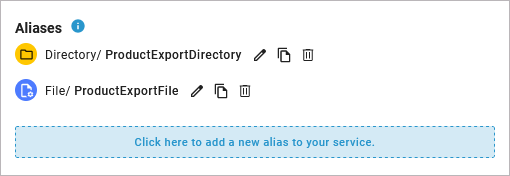
You can create aliases for the following adapters:
Additionally, you can create the following aliases:
Refer to Using AI Agents for more information.
Creating a New Alias
Click into the blue section above the list of aliases to create a new alias:
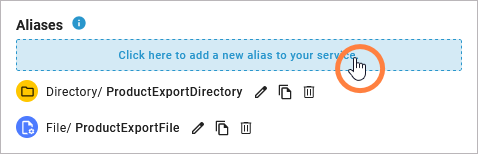
You can also create a new alias by copying the definitions of an existing one. See Copying an Alias below for more information.
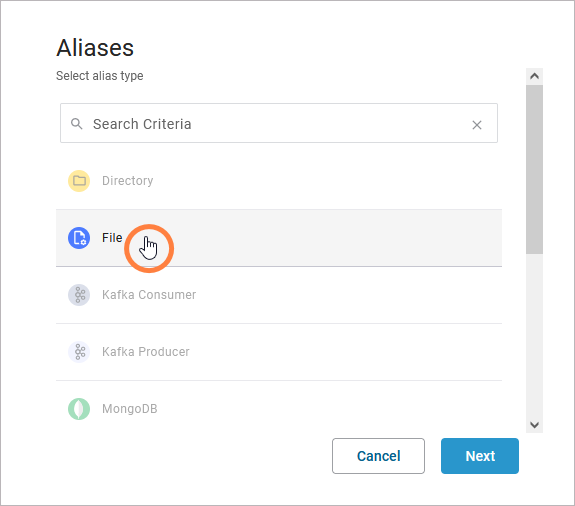
The Alias Wizard pops up to let you select the type of alias you want to create. Select a type from the list and click Next:
In the configuration dialog, assign a name and adapt the configurations to your need. Find more details on the different configuration possibilities per alias at Adapters pp. and AI Service Provider pp. If you have finished your entries, click Save:
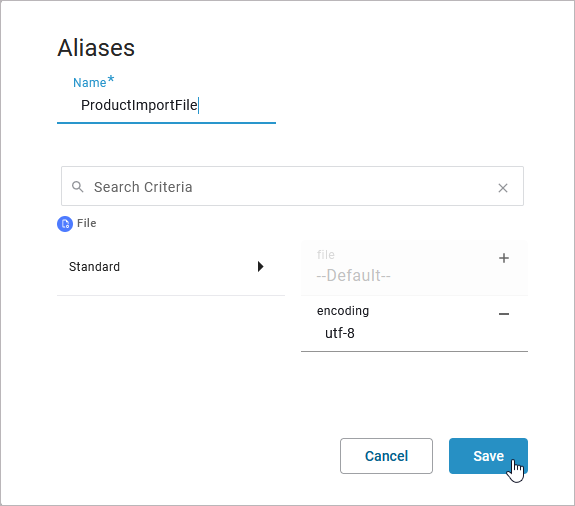
Alias names must be unique within the service.
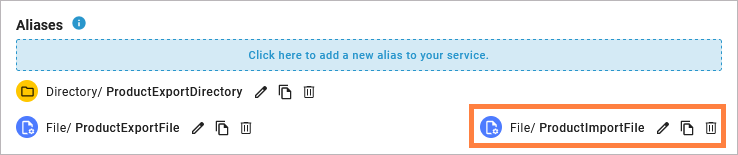
The new alias is listed in the aliases section. Aliases of the same type are grouped together:
Changing the Configuration of an Alias
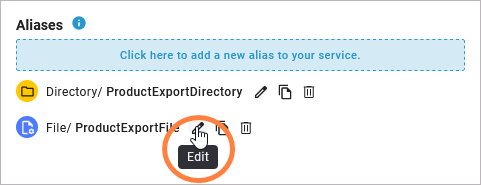
If you want to change or see the configuration of an alias, use option Edit:
The alias details are displayed. Make your changes and click Save to apply them:
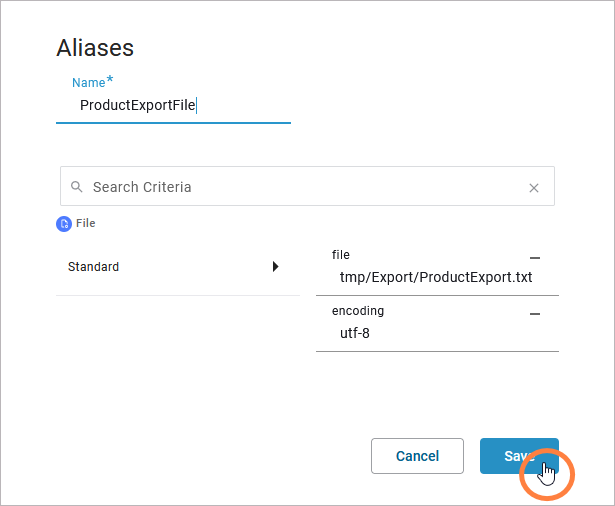
Find more details on the different configuration possibilities per alias at Adapters pp.
Using Variables in the Alias Configuration
This feature is only available in a Kubernetes setup.
If you are running PAS in a Kubernetes setup, you can use two different kinds of variables in the alias configuration:
Platform Environment Variables
On Kubernetes systems, platform services always include a system prefix in their names, such as acme-minio. This prefix is variable and depends on the specific system (prod, dev, test, …).
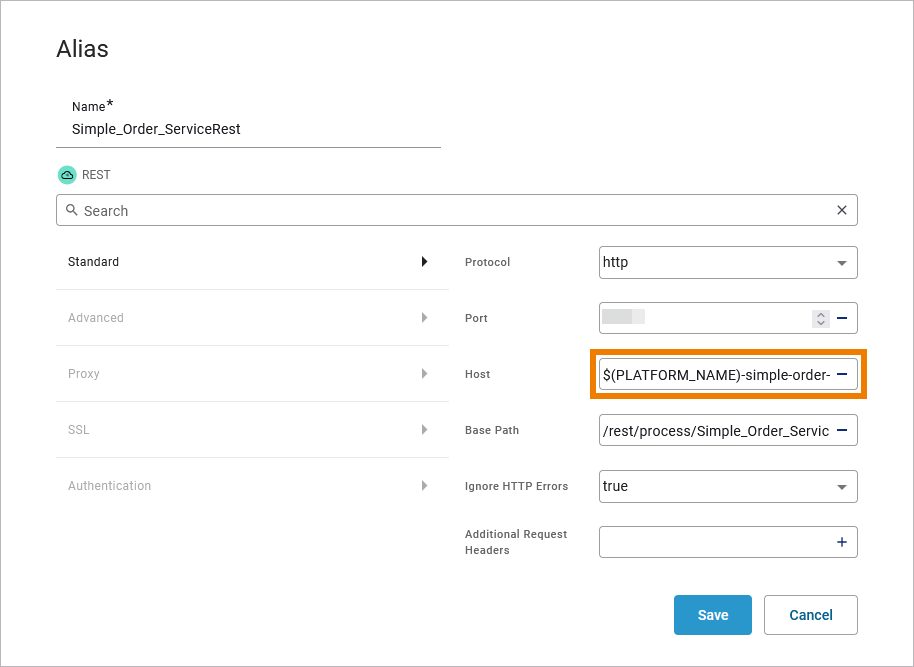
To avoid having to manually change the system entry, for example when you move a service from one system to another, you can use the following platform environment variable in these cases:
-
$(PLATFORM_NAME)
Example Usage:
In the alias configuration, enter the environment variable as follows: $(PLATFORM_NAME)-minio...
Global Variables
On Kubernetes systems, administrators can define their own global variables. In addition, every PAS Kubernetes installation includes several standard global variables that are ready to use. Refer to Managing Global Variables in the Administration Guide for details.
In alias configurations, they can be used as follows:
{{name of the global variable}}
Example Usage:
Open the PAS Administration to search the available global variables:
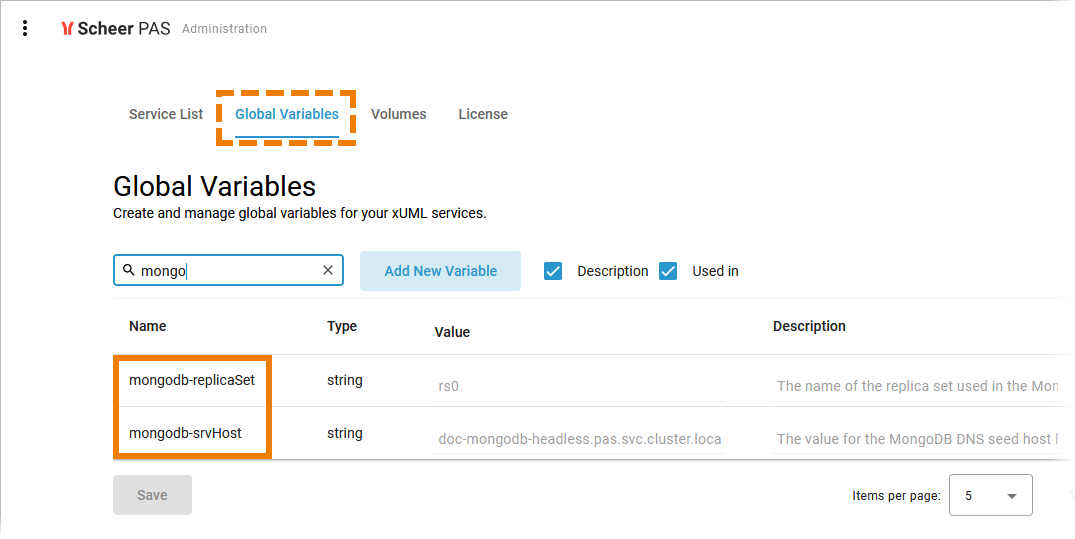
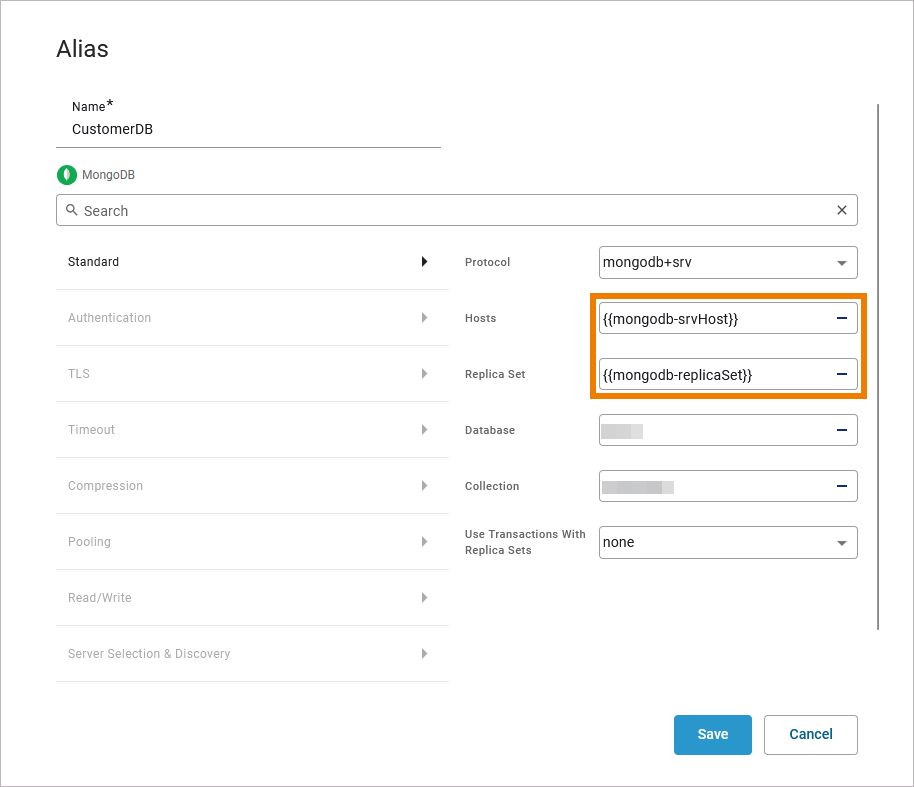
In the alias configuration, enter the name of the global standard variable from the administration in double curly brackets, e.g. {{mongodb-srvHost}}:
Copying an Alias
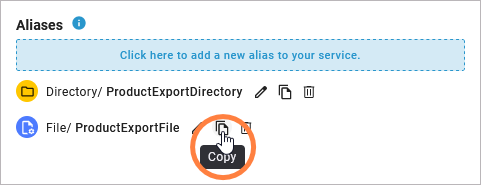
To copy the definitions of an alias to a new one, use option Copy on the alias:
In the configuration dialog, the attributes are already filled with the configurations from the source alias. Assign a name and adapt the configurations to your need:
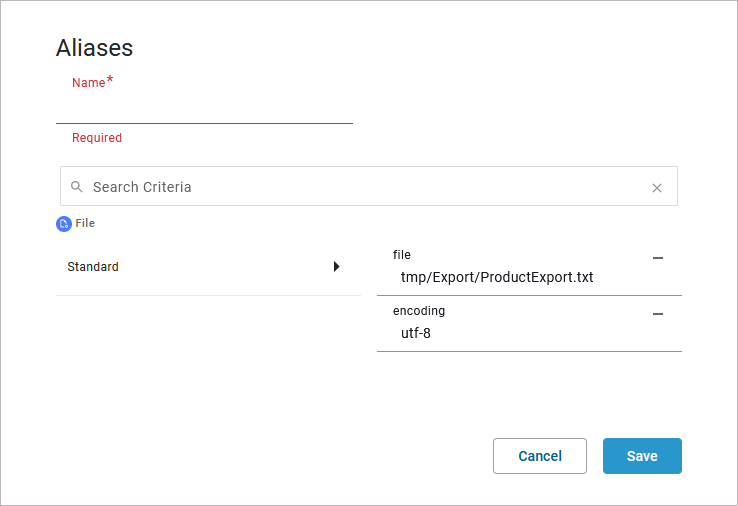
Alias names must be unique within the service.
Find more details on the different configuration possibilities per alias at Adapters pp. Click Save when you have finished.
Deleting an Alias
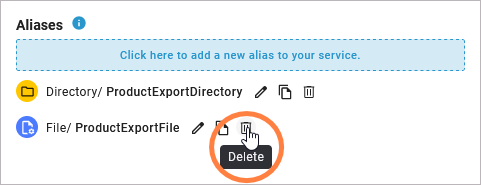
If you want to delete an alias, use option Delete:
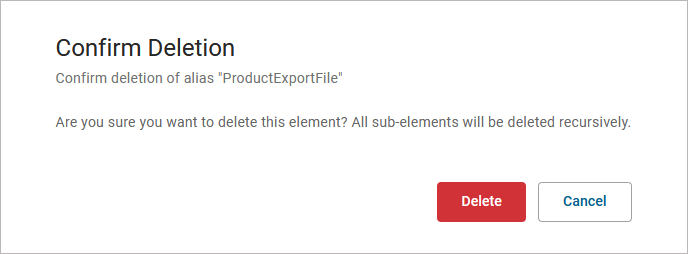
Confirm the deletion or click Cancel to abort:
Related Content
Related Pages:
Related Documentation: