
With the Log Adapter you can write log messages to the standard or transaction log of an xUML service. To write these log messages, you can use
-
the Log adapter, see
-
Action Script (see the log() Function and report() Function)
The logging follows the channel and sinks concepts:
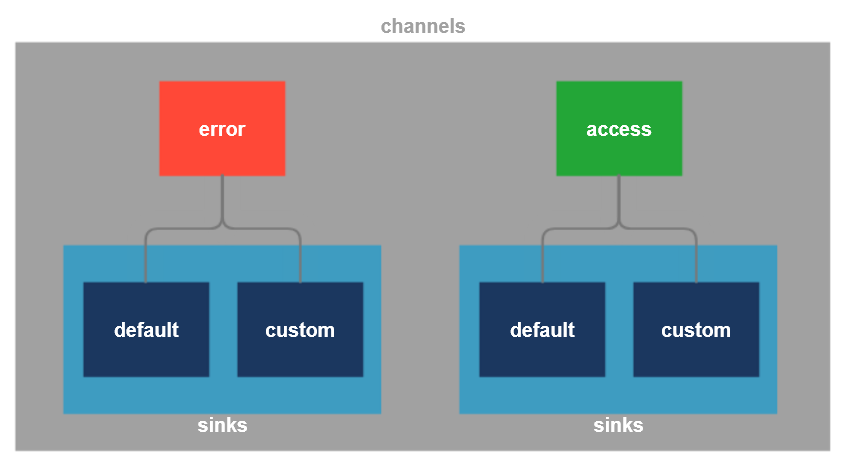
For more information on the logger concept, refer to xUML Runtime Logger Configuration.
Adding a Logger Adapter Operation to a Diagram
Expand the path to the Logger adapter in the service panel (Base Types/Bridge Base/Base Components/Add Ons/Logger):
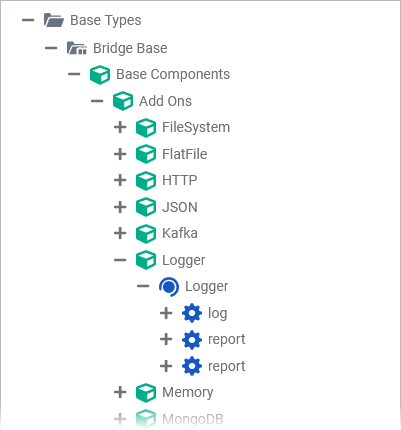
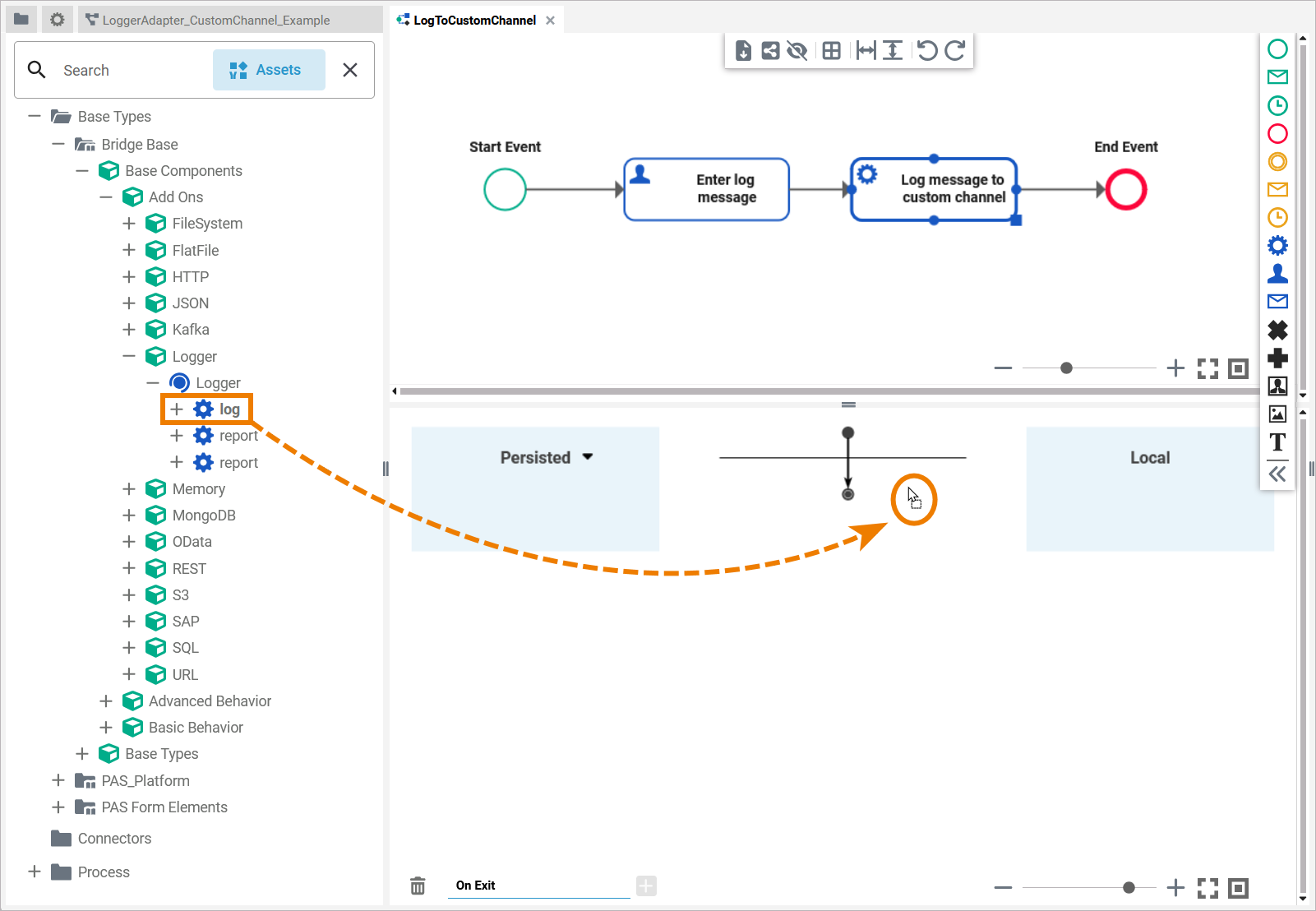
You can drag out operations from the data model to any diagram:
The example shows how to add a Logger adapter operation to a BPMN execution diagram:
Configuring a Logger Adapter Operation
Once an operation has been added to a diagram, it needs to be configured as a Logger adapter.
Select the newly added Logger adapter operation and switch to the Attributes panel:
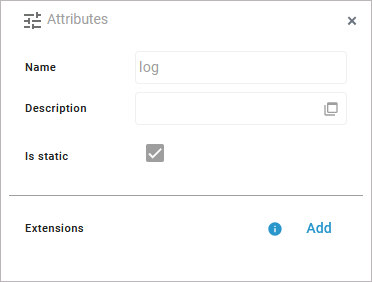
The following attributes are predefined and cannot be changed:
|
Attribute |
Description |
Allowed Values / Example |
|---|---|---|
|
Name |
The name of the Logger adapter operation. |
log |
|
Description |
If provided, you can find a description of the operation in this field. |
|
|
Is static |
Indicates that the operation is static. |
|
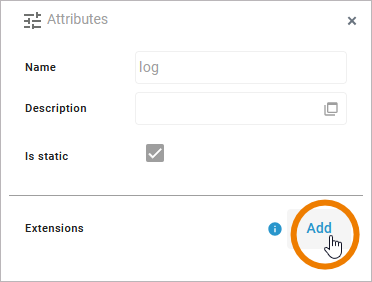
Click Add in the Extensions line to define the selected operation as to be a Logger adapter:
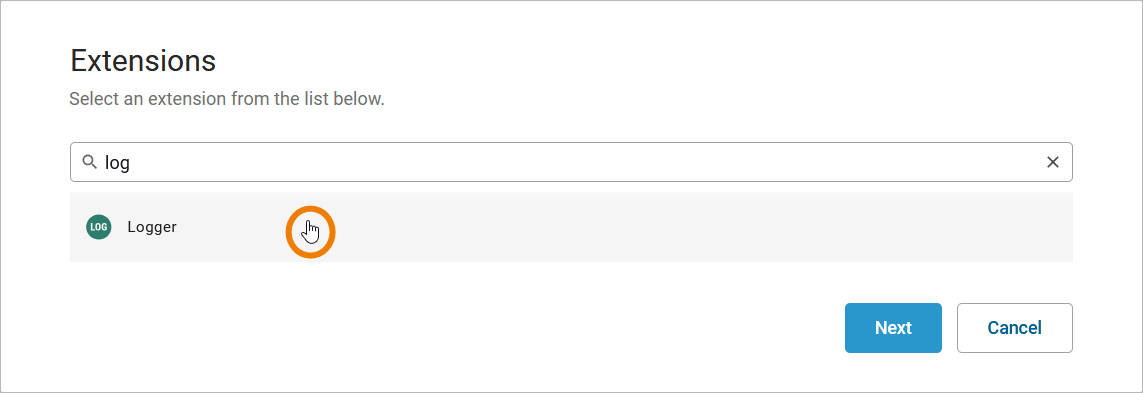
Search for the Logger Adapter and select it from the list of available adapter extensions. Click Next:
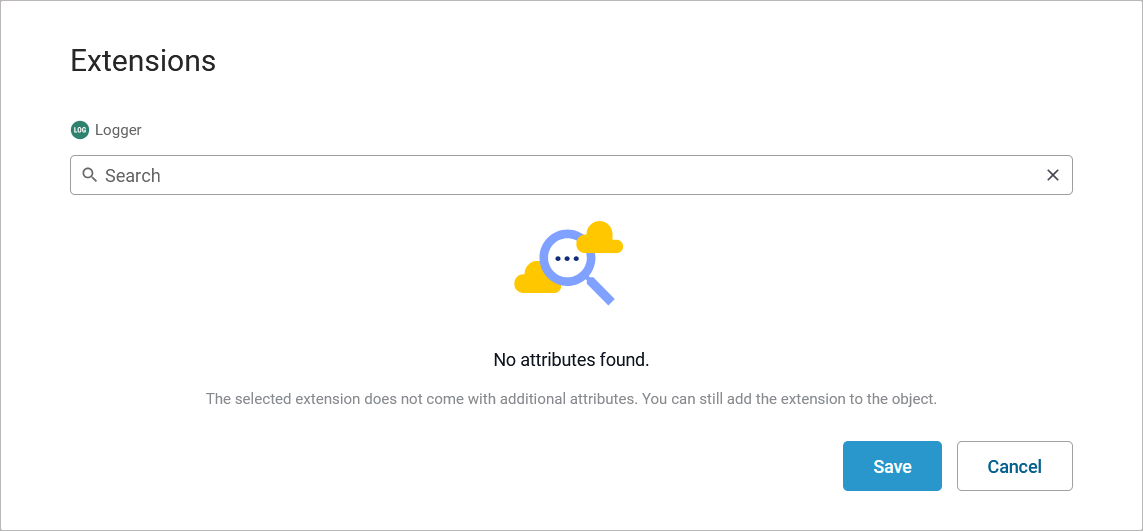
The Logger adapter does not need additional attributes. Click Save in the next window:
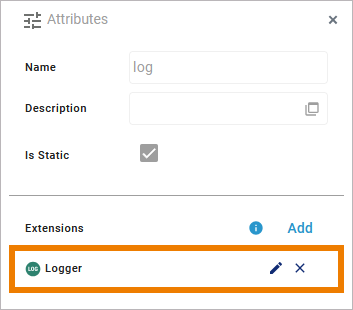
The Attributes panel now shows the added adapter extension:
Refer to Logger Adapter Reference for more information on the configuration options of this adapter.
Related Content
Related Documentation: