Deleting a deployment removes it from its environment. You can delete a whole project deployment or a single component deployment. Deleting is permanent, so the Control Hub asks you to confirm your decision.
Deleting a Project Deployment
You can delete an entire project deployment in two places:
-
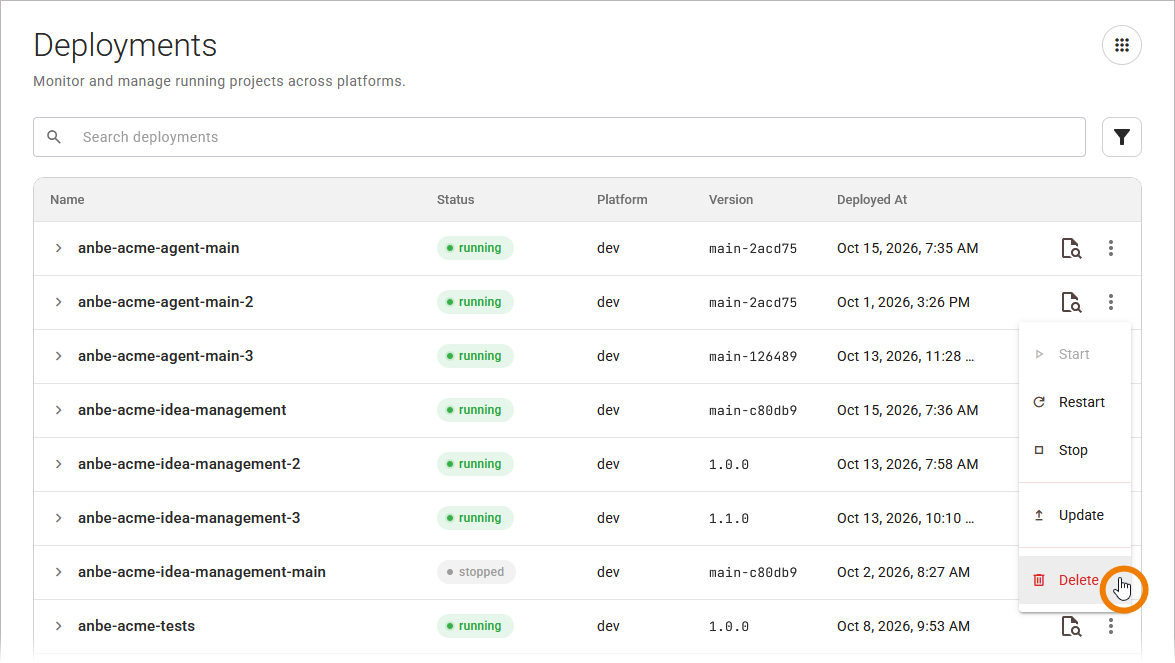
In the Deployments view: Open the More actions menu at the end of the project deployments' row, then select Delete.
For more details about the deployments table, refer to Working With the Deployments View.
-
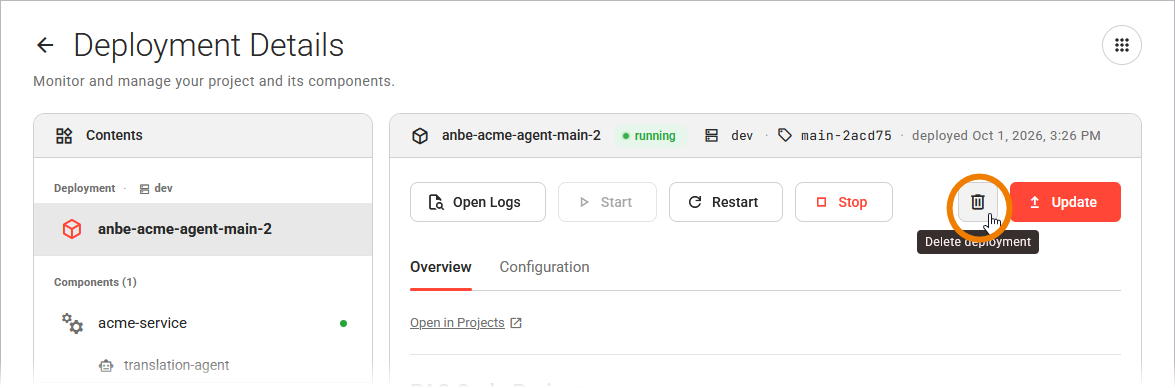
On the deployment detail page: Select Delete in the deployment panel. When the deletion finishes, the Control Hub returns you to the Deployments view.
For more information on the deployment details, refer to Working With the Deployment Detail Page.
Deleting a Component Deployment
You can delete a component deployment in the Deployments view: Expand the project deployment to list all component deployments, then open the More actions menu at the end of the component deployments' row, and select Delete.
Refer to Working With the Deployments View for details on expanding a project deployment.
Confirming the Deletion
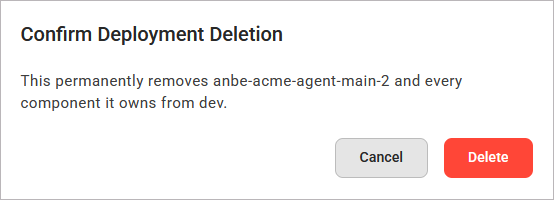
When you select Delete, a confirmation dialog opens. Its title and message depend on what you delete:
|
You Delete |
Dialog Title |
Message |
|---|---|---|
|
A project deployment |
Confirm Deletion |
This permanently removes <project name> from <environment>. |
|
A component deployment |
This permanently removes component deployment <name> from project deployment <project name>. |
Select Delete to confirm the deletion, or Cancel to keep the deployment:
If the deployment cannot be deleted, the Control Hub shows the message Deletion not possible, try again. Refer to Error Handling Deployments for the causes and how to resolve them.
It is not possible to manage legacy standalone service deployments in the Control Hub. They have no actions in the Deployments table and no detail page, so you cannot start, stop, restart, delete, or open them.