
|
Syntax |
|
|||
|---|---|---|---|---|
|
Semantics |
The operation By default, the following mapping rules apply:
For more mapping details refer to JSON Type Mapping. |
|||
|
Substitutables |
|
A JSON document as String. |
||
|
|
Target object, can be any object. |
|||
|
|
String literal. |
|||
|
Examples |
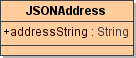
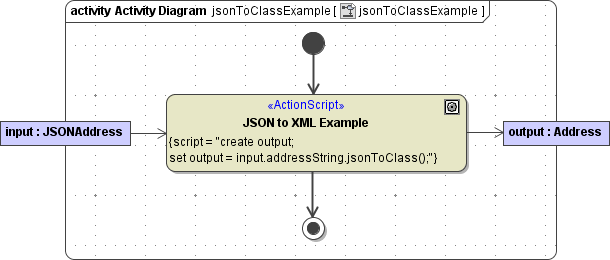
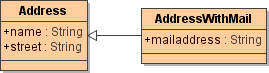
The action script below creates an object of type Address. An output object flow state named myAddress of type Address needs to be defined in the activity diagram. Below, a sample JSON string is shown to illustrate the mapping executed by the jsonlToClass() operation. The JSON string is mapped to an instance of Address as shown in the activity diagram.
Find below a second example, showing how to specify the Bridge type at runtime, e.g. if using a derived class. The Bridge type is declared by the attribute " |
|||

|
|
<your example path>\Add-ons\JSON\uml\userManager.xml |

For more information on JSON refer to the JSON Homepage or to RFC 4627.